Reem Ibrahim: Biography, Career, Political Views, and Media Work
Who Is Reem Ibrahim?
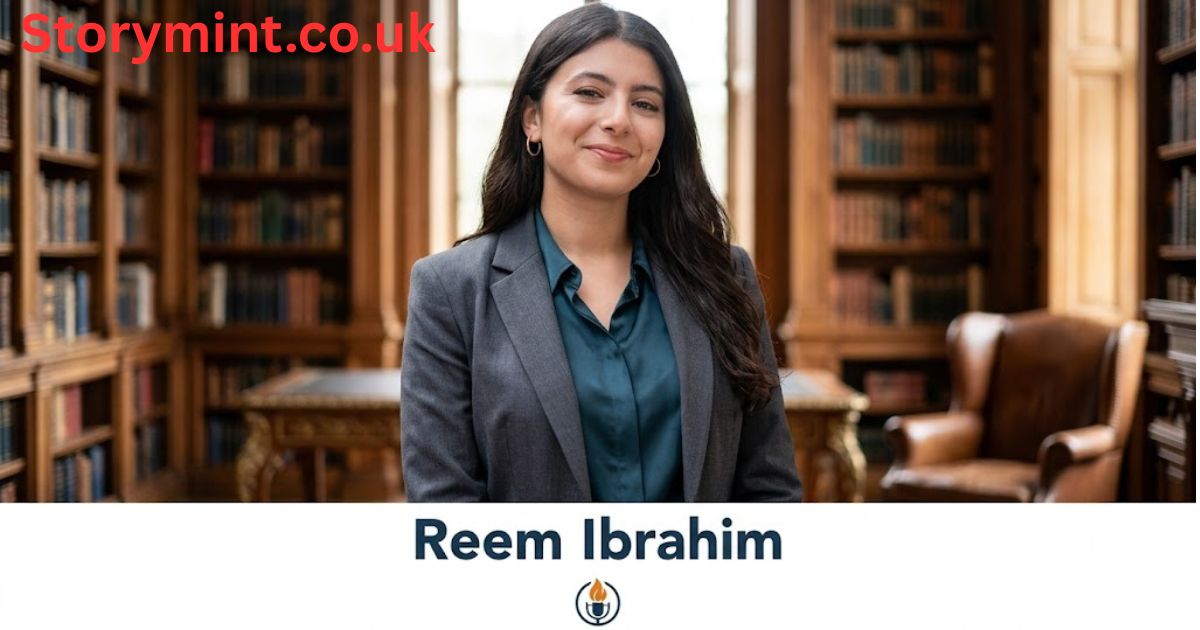
Reem Ibrahim is a British libertarian commentator, journalist, and policy researcher known for explaining classical liberal ideas in direct, accessible language. Her work centers on free markets, individual responsibility, consumer choice, economic freedom, and the unintended effects of government regulation. After building a public profile in Britain, she moved to the United States in early 2026 and joined Reason as a research fellow focused on policy and media.
At Reason, Ibrahim reports and produces commentary on regulation, trade, labor rules, free speech, and consumer freedom. Her role combines public-policy research with journalism and video, allowing her to translate technical debates into stories for a broad audience. This mix of research, broadcasting, and opinion writing has made her a recognizable younger voice within the international libertarian movement, particularly across British and American media.
Early Life, Education, and Political Development
Ibrahim was born in London and raised in Hillingdon, an area in northwest London, by parents of Moroccan and Egyptian heritage. Her personal biography describes an early interest in storytelling and musical theater before politics became a central focus. That multicultural London background later gave her a useful perspective on identity, opportunity, personal liberty, and the relationship between individuals and public institutions.
Her political development was not a straight line. At 16, she was initially attracted to the Corbyn-era political left. During her A-level studies, however, she encountered thinkers such as John Locke and John Stuart Mill. Their arguments about liberty, limited power, and individual choice encouraged her to reconsider her earlier views and explore the moral as well as economic case for freer markets.
Reem Ibrahim graduated from the London School of Economics and Political Science. While studying at LSE, she continued developing her political outlook through the work of classical liberal, libertarian, and free-market writers. Her stated influences include F.A. Hayek, Milton Friedman, Ludwig von Mises, Hannah Arendt, Ayn Rand, and Murray Rothbard, although her public commentary generally focuses more on practical policy than abstract philosophy.
Her education helped shape a communication style built around connecting economic principles with daily life. Rather than discussing markets only through statistics or academic theory, she often frames policy around prices, consumer options, employment, entrepreneurship, and personal decision-making. That approach is especially visible in her commentary on trade barriers, lifestyle regulation, labor policy, housing, tobacco alternatives, and government attempts to control consumer behavior.
Career at the Institute of Economic Affairs
Before moving to Washington, Reem Ibrahim worked at the Institute of Economic Affairs, a prominent British free-market think tank. She held communications and media roles, eventually serving as Head of Media, and received the Linda Whetstone Scholarship. Her work involved turning economic research into clear commentary, coordinating public communication, hosting discussions, and presenting market-oriented arguments through television, radio, podcasts, and written media.
She also co-authored “A Vapid Solution,” an IEA briefing that argued against banning disposable e-cigarettes and emphasized enforcement, consumer choice, and harm-reduction concerns for adults who smoke. In practice, the project reflected themes that repeatedly appear in her work: skepticism toward prohibition, attention to unintended consequences, and the belief that restricting legal products can create costs that policymakers underestimate or ignore.
Move to Reason and Work in Washington

In early 2026, Ibrahim moved from London to the Washington, D.C., area and became a Research Fellow, Policy and Media, at Reason. The organization describes her work as reporting and writing about regulation, trade, and economic freedom while converting policy analysis into journalism and video. The move expanded her focus from primarily British political debates to American and international policy issues.
Her Reason coverage has addressed subjects including labor regulation, free speech, nicotine policy, price controls, artificial intelligence, government spending, and restrictions on consumer behavior. Although her articles cover different countries and industries, they usually examine the same underlying question: whether state intervention solves the stated problem or produces higher costs, fewer choices, weaker incentives, and new forms of political control.
Media Appearances and Journalism
Reem Ibrahim has appeared on major British television and radio platforms, including the BBC, LBC, GB News, TalkTV, and Channel 5. These appearances have positioned her as a panelist who argues from a libertarian or classical liberal perspective. She typically discusses economic policy, political responsibility, regulation, public spending, consumer freedom, and disputes over the appropriate limits of government power in modern democratic societies.
Her writing has appeared in British outlets including The Daily Telegraph, The Spectator, City AM, the Express, and CapX, alongside her current work for Reason. This range matters because it places her arguments before audiences that do not necessarily identify as libertarian. Her journalism often uses current political controversies as entry points for broader claims about incentives, institutional limits, market competition, and individual autonomy.
Political Views and Core Policy Themes
Ibrahim’s political outlook is best described as libertarian and classically liberal rather than conventionally partisan. She argues that individuals generally make better decisions about their own lives than centralized authorities do. Her public work favors competitive markets, freer trade, economic growth, consumer choice, civil liberties, and limits on regulations that restrict peaceful behavior without demonstrating clear and measurable public benefits.
That position does not mean her commentary is politically neutral or universally accepted. Libertarian arguments often clash with supporters of stronger regulation, redistribution, public ownership, or precautionary restrictions. A fair profile should therefore distinguish between her documented career and her policy advocacy. She is not simply reporting events; much of her work openly advances a particular view of freedom, markets, and government power.
Why Reem Ibrahim Is Gaining Attention
Reem Ibrahim has gained attention because she combines policy research with the speed and clarity required for broadcasting and digital media. She entered public commentary through online content, appeared on television at a young age, and built a career that crosses think tanks, newspapers, radio, television, podcasts, and video journalism. That versatility allows her to reach audiences beyond traditional academic policy circles.
Her move to Reason also gives her a stronger platform in the United States, where debates over trade, speech, labor law, technology, public spending, and lifestyle regulation remain highly contested today. Whether readers agree with her conclusions or not, her career reflects a wider shift in political communication: researchers are increasingly expected to explain complex ideas quickly, argue clearly, and work across several media formats.
Conclusion
Reem Ibrahim is a British-born libertarian journalist and policy commentator whose career has moved from London’s free-market think-tank world to Reason in the Washington region. Her background at LSE and the Institute of Economic Affairs helped establish her expertise in communicating arguments about markets, regulation, trade, consumer freedom, and individual responsibility to broad, non-specialist audiences across multiple media formats.
Her political journey from teenage support for the Corbyn left to classical liberal advocacy is central to her public story, but her current work is broader than that personal transition. Through reporting, opinion writing, broadcasting, and video, she has become an active participant in policy debates on both sides of the Atlantic. Her influence will ultimately depend on the strength of her arguments, reporting, and ability to persuade audiences beyond libertarian circles.